Skip to content

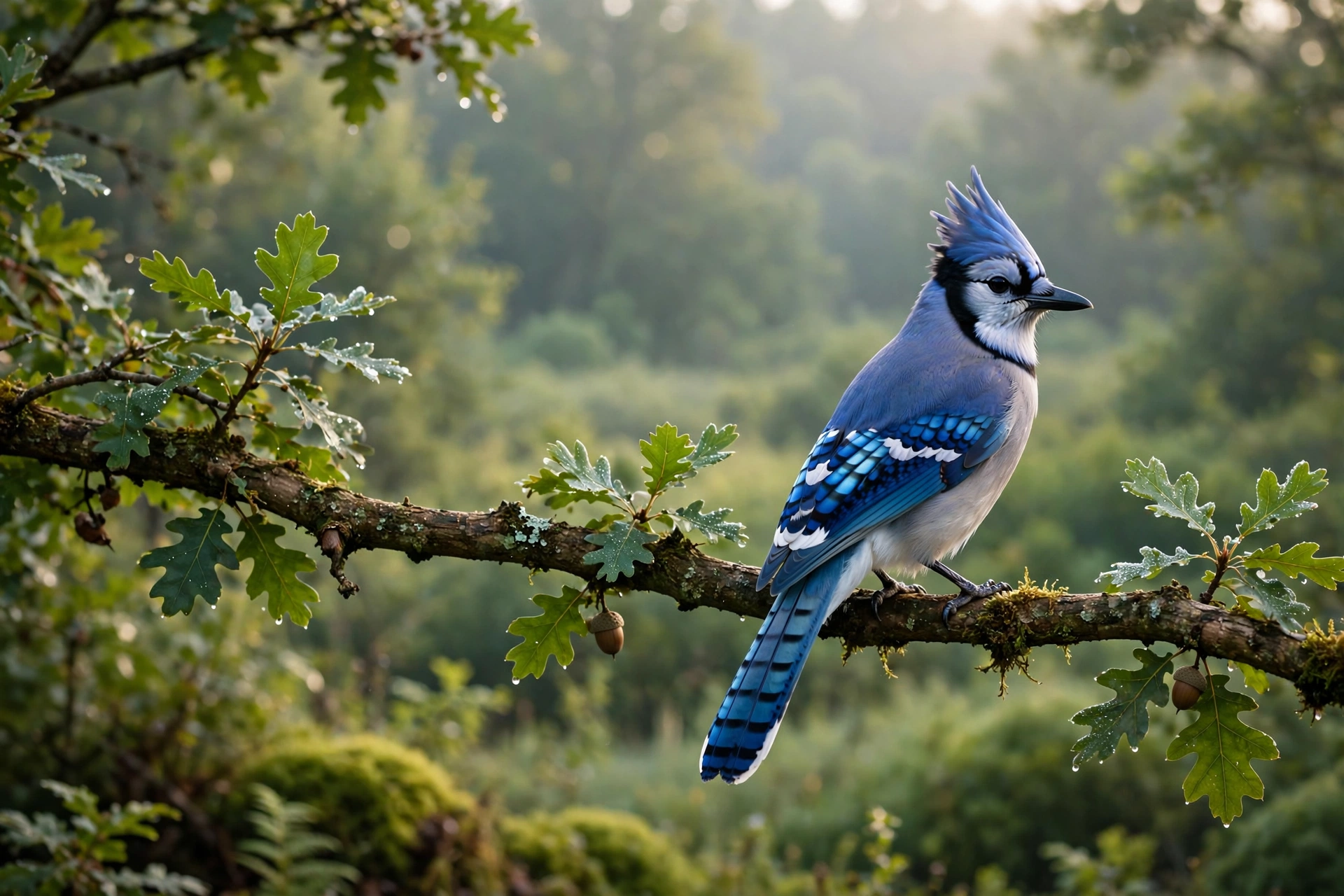
You see a flash of blue at the feeder and a question pops into your head: is that a male or a female blue jay? Here is the honest answer that most guides dance around. You probably cannot tell, at least not by looking at its feathers.
Blue jays are one of the classic monomorphic birds, meaning the two sexes look almost exactly alike. Males and females wear the same blue crest, the same black necklace, and the same barred wings. That sameness is not a trick of your eyesight. It is biology.
But “you cannot tell” is not the whole story. There is one subtle size difference, and once you learn the behavior clues, especially during breeding season, you can make a solid educated guess. This guide covers the honest short answer first, then walks through what actually works, what does not, and the exact moments when you can be confident about what you are seeing.
The Short Answer: You Cannot Reliably Tell Them Apart by Sight
Let us get this out of the way with no hedging. There is no single field mark that separates a male blue jay from a female. Their plumage patterns are identical, their colors do not change with the seasons, and no throat patch, wing bar, or crest shape belongs to one sex only. If you came here hoping for one magic clue, this is the moment to reset your expectations.
The contrast with other backyard birds is what makes blue jays so frustrating. A male northern cardinal is impossible to confuse with the warm brown female, and if you want a study in that difference, our guide to male vs female cardinal identification shows how easy sexing can be when nature cooperates. Blue jays simply do not cooperate.
Even trained banders struggle with this species. Wing chord measurements taken in the hand overlap so much between the sexes that they are useless for sexing a single bird. Think about that: if the measuring tools at a banding station cannot settle the question, your eyes at twenty feet from the kitchen window cannot either. Anyone who tells you they can sex a lone blue jay at the feeder by sight is guessing.
So where does that leave you? With behavior, context, and season. Those are your real tools, and the rest of this guide is about learning to use them well.
Why Blue Jays Are So Hard to Sex: Sexual Monomorphism
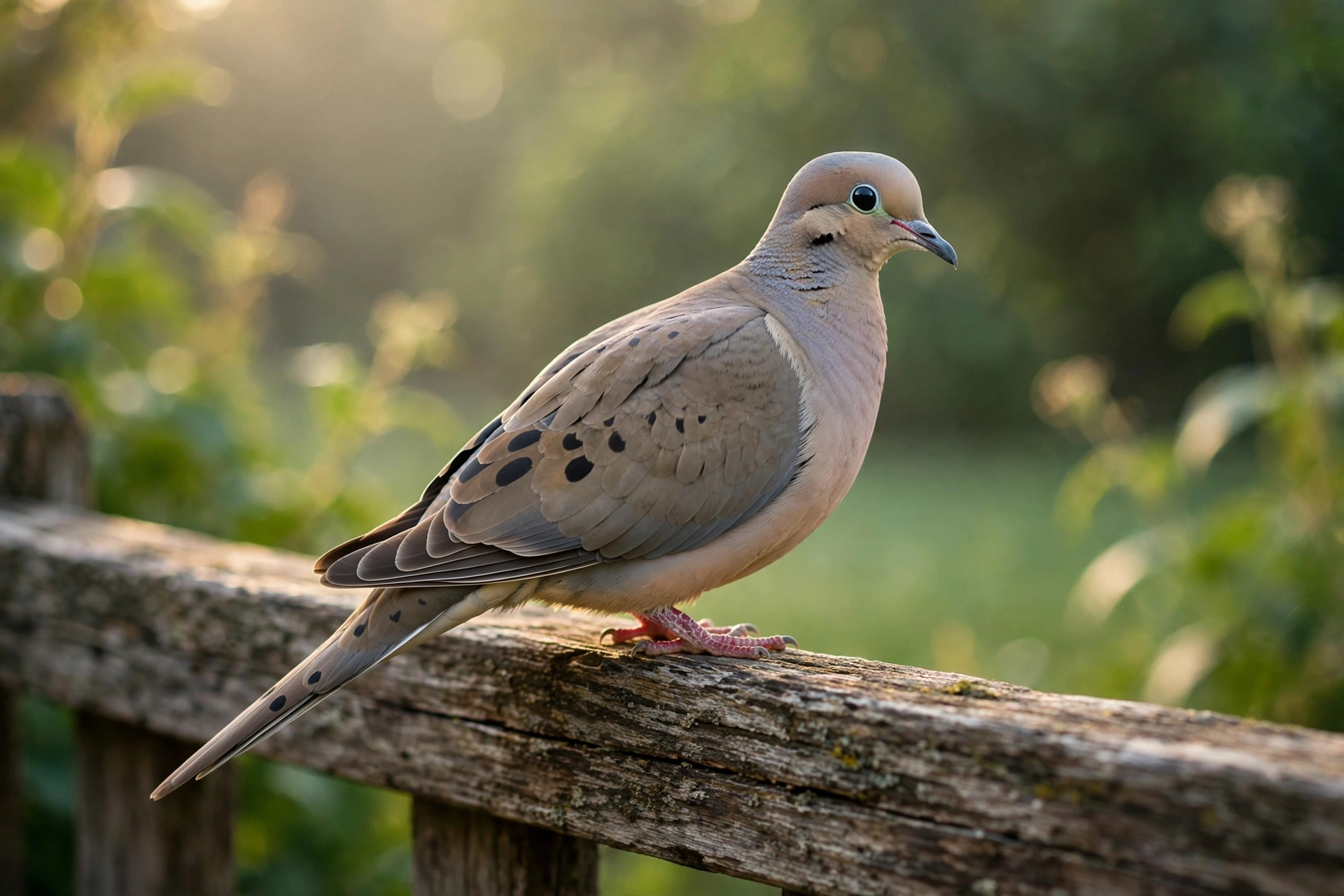
Birds in which both sexes look alike are called monomorphic. Blue jays belong to this club along with black-capped chickadees, mourning doves, and American crows. In each of these species, a casual observer would never guess which bird is which from plumage alone.
Why does monomorphism happen? In species where showy males win more mates, evolution pushes males toward brighter, bolder colors. Blue jays took a different path. They pair up for life, they are noisy and deeply social, and both parents share the heavy work of raising young. In that lifestyle, the pressure for males to outshine females is weak, so the sexes kept the same uniform.
Here is a detail that makes the sameness even more interesting. The black necklace, the white face patches, and the facial markings vary noticeably from one blue jay to another. Researchers believe this individual variation helps blue jays recognize each other, almost like faces. So when you notice that two jays at your feeder look slightly different, you are probably seeing individuality, not a male and a female.
The Subtle Size Difference: Males Are Slightly Larger
This is the one physical difference backed by real data. On average, male blue jays run slightly larger than females across length, weight, and wingspan. Multiple ornithological references confirm it, and it is the single trait where the sexes truly differ.
The trouble is the word average. The size ranges overlap so completely that a large female can easily outmeasure a small male. For the record, Cornell Lab of Ornithology lists these measurements for both sexes together, which tells its own story: the lab does not even bother splitting them, because it cannot be done reliably.
- Length: 9.8 to 11.8 inches (25 to 30 cm)
- Weight: 2.5 to 3.5 ounces (70 to 100 g)
- Wingspan: 13.4 to 16.9 inches (34 to 43 cm)
So how do you use this? Size only becomes useful when you watch a mated pair side by side. In spring, when a bonded pair visits your yard together, the male often looks just a touch bulkier, with a slightly bigger head and a longer tail. It is a whisper of a difference, not a shout, and it takes practice to see.
The bottom line is simple. If one jay looks noticeably larger than the jay standing next to it, the bigger one is probably the male. If there is only one jay in view, size tells you nothing at all.
Behavior Clues: What the Birds Do Gives Them Away
Watching what blue jays do is far more useful than studying what they look like. Blue jays are busy, expressive birds with complex social lives, and their behavior reveals roles that feathers hide. Here are the clues worth learning.
- Courtship feeding: this is the single most reliable visual clue. During courtship and the nesting period, the male feeds the female, often passing a seed or insect beak to beak. If you see one jay handing food to another instead of eating it, you are almost certainly watching a male feeding his mate.
- Nesting roles: both sexes help build the nest, but the female does all of the incubating and brooding. The bird sitting on the eggs is the female, period. The bird arriving with food for her is the male. Watch a nest from a respectful distance and the roles sort themselves out quickly.
- Courtship displays: in spring, the female often takes the lead. She flies, and males follow her. A male trying to impress her will bob his head and fluff out his body feathers, sometimes in a small group of competing males. If you see jays performing this little dance, the one being followed is the female.
- Food deliveries: once the eggs hatch, both parents bring food to the chicks, so this clue fades. But during incubation, a jay that repeatedly flies to the same branch with a full beak and vanishes into the foliage is very likely a male provisioning his mate.
- Quiet near the nest: blue jays are famously loud, but both sexes go quiet and secretive around the nest site. A jay that lands silently, looks around, and slips into a shrub may be heading home to the nest.
Calls and Sounds: A Small Hint
Blue jays are among the most talkative birds in North America, with a huge vocabulary that ranges from the harsh “jay jay” alarm scream to convincing hawk mimicry. Both sexes use the full range of calls, so you cannot sex a jay by its voice the way you might with some songbirds. Our article on the morning dawn chorus explains how complex bird vocalizations can get.
There is one small hint hidden in their quieter sounds. During courtship, pairs exchange soft, musical notes, sometimes called the whisper song or the “rusty pump” call, which squeaks like an old hand pump. You will usually hear it when a pair is close together, often while the male is feeding or courting the female. It does not tell you which bird is which on its own, but it tells you courtship is happening, and that is when the real clues appear.

What Does NOT Work: Myths About Sexing Blue Jays
The internet is full of confident claims about telling male and female blue jays apart by sight. Most of them are myths, repeated so often that they start to sound true. Here are the ones to stop trusting.
- Brighter blue means male: color brightness changes with light, feather wear, and age, not sex. A blue jay’s blue is not a pigment at all. It comes from the microscopic structure of the feathers scattering light, so the same bird can look electric in sunlight and dusty in shade. Both sexes share this trick.
- A bigger crest means male: the crest is driven by mood, not sex. It shoots up when the bird is excited or aggressive and lies flat when the bird is relaxed, feeding with family, or tending young. Males and females raise and lower their crests identically.
- A thicker black necklace means male: as mentioned above, necklace patterns vary from bird to bird and likely help jays recognize individuals. It is a name tag, not a sex badge.
- More aggressive behavior means male: both sexes defend nests and feeders fiercely. A female protecting her eggs is every bit as bold and noisy as a male, and females have been known to dive at intruders with real fury.
- Duller birds are females: this one deserves special attention because it causes the most mistakes. Dull, grayish jays are usually juveniles, not females. Age explains the difference, not sex.
Juvenile vs Adult: The Other Common Mix-Up
Many people who think they have spotted a female blue jay have actually found a young one. Juvenile blue jays look noticeably different from adults, and because people assume dull means female, the mistake is easy to make.
A young jay wears looser, fluffier plumage in a grayer, duller blue. Its tail is shorter, its crest looks scruffy and underdeveloped, and you may spot pale, fleshy flanges at the corners of its beak where it recently begged for food. None of these features say anything about sex. They say the bird hatched this year.
By late summer, juveniles begin to look more like adults, though they can still seem a little rough around the edges. They also travel with their parents through early fall, so a scruffy young jay trailing two sleek adults is a family group, and the adults’ roles will follow the usual pattern.

When You CAN Tell: Breeding Season Is Your Best Window
Your chances of sexing blue jays go from near zero to genuinely good during the breeding season. Blue jays begin nesting in mid-March, peak from mid-April through May, and can still be at it into July. If you want the full picture of how nesting timing works across species, see our guide on when birds lay eggs and the nesting season.
Here is your playbook for the spring window:
- Watch a pair in spring. Courtship feeding, head bobbing, and follow-the-female flights reveal the roles within minutes.
- Find the nest from a distance. The bird doing the sitting is the female. Never approach closely; watch from afar with binoculars so you do not disturb the birds.
- Track the food deliveries. During the 16 to 18 day incubation period, the bird bringing food to the sitting bird is the male.
- Watch after hatching. Only the female broods the naked young for the first 8 to 12 days, while both parents ferry food to the nest.
- Count the eggs from afar, if you can. A typical clutch is 3 to 6 eggs, averaging 4 or 5, and the young fledge 17 to 21 days after hatching. Timing a nest gives you a calendar of exactly when each role is on display.
Outside this window, save yourself the trouble. In winter, when mixed flocks gather at feeders, even researchers fall back on DNA testing or long-term banding records to know a bird’s sex for certain. There is no shame in admitting you cannot tell. The science agrees with you.
Male vs Female Blue Jay: Quick Comparison Table
Here is everything in one place, so you can see at a glance which traits differ and which do not.
| Trait | Male | Female |
|---|---|---|
| Plumage | Blue crest, black necklace, barred wings and tail | Identical to the male |
| Size | Slightly larger on average | Slightly smaller on average |
| Courtship | Feeds the female, bobs head, fluffs feathers | Leads courtship flights, receives food |
| Nest building | Helps build the nest | Helps build, usually finishes it |
| Incubation | Does not incubate | Does all of the incubating |
| Brooding young | Does not brood | Broods young for the first 8 to 12 days |
| Feeding the young | Brings food to nestlings | Brings food to nestlings |
| Calls | Full vocal range | Full vocal range |

Frequently Asked Questions
Can you tell a male blue jay from a female by color?
No. Their plumage is identical, and any difference in brightness comes from lighting, feather wear, or age, not sex. The blue itself is structural color, not pigment, so it shifts with the angle of the light.
Is the male blue jay bigger than the female?
On average, yes, but the difference is small and the size ranges overlap almost completely. Size only helps when you can compare two birds standing side by side, such as a mated pair.
Which blue jay sits on the nest?
The female. She does all of the incubating over 16 to 18 days and all of the brooding after the eggs hatch. The male brings her food while she sits.
Do male blue jays feed females?
Yes, both during courtship and while the female is incubating. One jay passing food to another beak to beak is one of the most reliable behavior clues you will ever see.
Are blue jays monogamous?
Yes, blue jays typically form pair bonds that last for life. That is why you often see the same pair working a territory together through the whole breeding season.
How can scientists tell male and female blue jays apart?
The only certain methods are DNA testing, examination in the hand during the breeding season (females develop a brood patch), or long-term banding studies where an individual bird’s role has been observed over time.
Do juvenile blue jays look different from adults?
Yes. Young birds have duller, grayer blue plumage, looser feathers, shorter tails, scruffy crests, and sometimes pale fleshy corners at the beak. Do not mistake a juvenile for a female.
When is the best time to try to sex blue jays?
During the breeding season, from March through July, when courtship feeding and nesting roles reveal which bird is which. In winter, without those behaviors to watch, even experts cannot do it reliably.
References and Further Reading
- Cornell Lab of Ornithology: Blue Jay Overview, All About Birds, with species measurements and identification details.
- Audubon: Blue Jay Field Guide, covering nesting, feeding behavior, and courtship.
- All Seasons Wild Bird Store: Male and Female Look-Alikes, on monomorphic backyard birds including the blue jay.
Conclusion
So, male vs female blue jay, can you tell them apart? Honestly, not by sight. Their feathers keep their secret well, and every supposed visual shortcut turns out to be a myth. That is not a failure on your part. It is simply how this species is built.
But if you watch long enough, especially in spring, the birds will tell you themselves. Look for the feeding, the sitting, and the division of labor around the nest. That is where the real difference lives, not in the blue. And the next time someone confidently announces the sex of a lone jay at the feeder, you will know enough to smile and keep watching.