 Skip to content

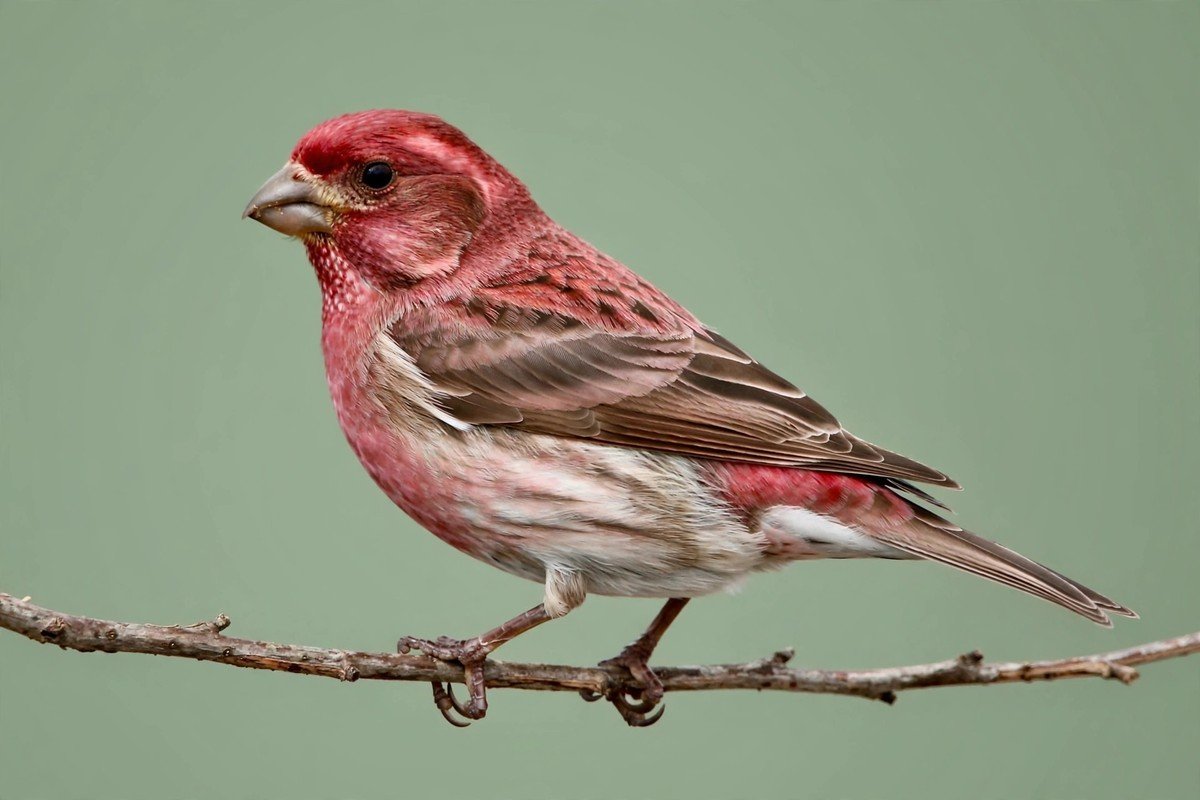
The fastest way to settle a house finch vs purple finch debate is to check where the red goes. On a male house finch, the red stays in patches: forehead, throat, and upper breast, with plain brown streaks everywhere else. On a male purple finch, the red washes across the whole bird, head, back, wings, and rump, as if someone dipped it in raspberry juice.
Females tell an even simpler story. A female purple finch wears a bold, high-contrast face pattern with a pale eyebrow stripe. A female house finch looks plain and streaky, with no strong face markings at all. Once you learn these patterns, plus a few backup marks on the bill, tail, and song, you can name the bird at your feeder in seconds.
This guide walks through the seven most reliable field marks, one at a time, with a quick comparison table you can scan before you scroll.

House Finch vs Purple Finch: Side-by-Side Comparison
If you only have ten seconds, this table gives you the answer. Each row below gets its own section with more detail and exceptions to watch for.
| Field mark | House Finch | Purple Finch |
|---|---|---|
| Male color | Red limited to forehead, eyebrow, throat, and upper breast; brown streaky back | Raspberry-red wash over head, back, wings, and rump |
| Female face | Plain brown face, no pale stripes | Bold pattern: whitish eyebrow plus dark mustache stripe |
| Streaking below | Blurry, soft streaks across breast and belly | Crisp, clean-edged streaks on breast and flanks |
| Undertail coverts | Streaked brown | Clean white, unstreaked |
| Bill | Smaller; upper edge curves downward toward the tip | Chunkier; straight, steep-sided cone |
| Tail | Only slightly notched at the tip | Clearly and deeply notched at the tip |
| Song | Long, fast warble ending in an upward “cheeer” | Rich, musical, slightly burry warble from treetops |
| Call note | Rising, chirpy “weet” | Sharp, metallic “pik” |
| Range | Year-round across almost all of North America | Breeds in Canada and the northern US; winters south, irregularly |
| Habitat | Cities, suburbs, farms, feeders | Coniferous and mixed forest; visits feeders in winter |
| Feeder behavior | Sits on the feeder and cracks seeds in place | Shyer; often forages in the upper parts of trees |
1. Male Color: A Red Patch vs a Raspberry Wash
Start with the males, because they cause most of the confusion. A male house finch concentrates its color in three places: the forehead, the throat, and the upper breast. The rest of the bird stays brown, with a streaky back and streaky flanks framing the red like a vest that ends too soon.
A male purple finch looks like a different design altogether. The raspberry red spreads over the crown, cheeks, breast, back, and rump. The Cornell Lab describes the purple finch as raspberry red on the head, breast, and back, and Roger Tory Peterson famously called it a “sparrow dipped in raspberry juice.” That image is the best memory aid in this whole article.
One caveat keeps this mark honest. House finch color comes from carotenoids in the diet, so some males are yellow or orange instead of red. Check the pattern, not just the hue. A yellow male house finch still keeps its color in patches, while a purple finch always shows the full wash.
2. Female Face: Plain vs Boldly Patterned
Females are where the real ID money is. Female house finches and purple finches look like generic brown birds at first glance, but their faces settle the question immediately. The Cornell Lab’s House Finch comparison notes that female purple finches show a white eyebrow and mustache stripe that female house finches simply lack.
Look at the female purple finch closely. You will see a broad whitish eyebrow stripe above the eye, a dark cheek patch, and a dark line running down the side of the throat like a mustache. The contrast is strong and the pattern reads clearly even at a distance.
Now look at the female house finch. Her face is plain brown with no pale stripes and no dark mustache. If you are looking at a streaky brown finch with a boring face, you are looking at a house finch. This single mark identifies more females than any other.

3. Streaking on the Underparts: Blurry vs Crisp
When the face is hard to see, move your eyes to the belly. Female and immature purple finches carry crisp, clean-edged streaks on the breast and flanks. Each streak looks like a short, deliberate brushstroke with clear borders. Cornell’s Purple Finch comparison calls out exactly this difference: crisp streaks on the purple finch versus blurry streaks on the house finch.
For one more check, glance at the undertail coverts, the feathers beneath the tail. The house finch streaks them. The purple finch keeps them clean and white. Birders who learn this tiny patch rarely misidentify these birds again.
4. Bill Shape: Curved vs Chunky and Straight
Both birds eat seeds, but their bills tell different stories. The house finch bill is smaller overall, and the top edge of the upper mandible curves gently downward toward the tip. The curve gives the house finch’s head a slightly rounded, almost soft look.
The purple finch bill is bigger and more powerful, built for cracking hard tree seeds and buds. Its edges run straight, forming a steep triangle that makes the whole head look bulky. When you see one after the other, the purple finch looks like it was designed by someone who drew the bill first and the head second.
This mark shines when plumage fails you. A backlit bird, a bird in shadow, or a bird at an odd angle can hide color and streaking. The bill silhouette never hides.
5. Tail Shape: Slight Notch vs Deep Notch
Both species have notched tails, so the question is how deep the notch runs. The purple finch shows a clear, deep notch at the tip of a relatively short tail. It is obvious when the bird fans its tail on landing or takeoff.
The house finch tail is only slightly notched, and from most angles it looks nearly square. Cornell’s identification material describes the purple finch’s tail as clearly notched, while the house finch gets the milder treatment.
Tail shape is a support mark rather than a deciding one. Use it to confirm a call you have already made from color, face, or bill, not to make the call from scratch.
6. Song and Call: Fast Warble vs Rich Warble
In spring and early summer, your ears can do the identifying. The purple finch sings a rich, musical, slightly burry warble, often delivered from the highest branches of a tree. It sounds full and rounded, like the bird is in no hurry.
The house finch sings a long, fast, jumbled warble that usually ends with an upward-slurred note, a rising “cheeer” tacked on at the finish. Once you hear that ending, the song is unmistakable.
The call notes differ too. House finches give a familiar rising “weet” as they fly overhead in small chattering flocks. Purple finches give a sharp, metallic “pik.” Many birders learn the purple finch’s call first and let the song come later.
7. Range and Habitat: City Resident vs Forest Visitor
Location and season narrow the field before you even lift your binoculars. The house finch is a year-round resident across most of North America, and it loves human spaces: suburbs, city parks, farms, and feeders. If you see a red finch in July in the eastern United States, it is almost certainly a house finch.
The purple finch is a bird of coniferous and mixed forest that breeds in Canada, the northern states, and along the Pacific Coast. It moves south for winter, and its movements are famously irregular. Purple finches follow cone crops, so they show up in big numbers some winters and barely appear in others, returning to specific regions roughly every other year.
Habitat seals many identifications. A finch singing from the top of a spruce in northern Minnesota in June is a purple finch. A finch nesting on a porch light in Ohio is a house finch. When the two ranges overlap in winter, fall back on the plumage marks above.
The two species share a complicated history. The house finch is native to the western United States and Mexico but was introduced to the East in the 1940s, and it has outcompeted the purple finch across much of the eastern breeding range. Missouri wildlife biologists report that where the two come into direct contact, the house finch wins the contest about 95 percent of the time.
How to Handle Tricky Individuals
Real birds do not always read the field guides. Here is how to work through the hard cases without guessing.
- Immature males: Young males of both species look like females. Run through the female marks, face pattern and streak crispness, rather than hunting for red that is not there yet.
- Western purple finches: Birds along the Pacific Coast run duller and more olive, with softer flank markings and a less distinct head pattern. The bill and tail shape still hold.
- Cassin’s finch: In the mountain West, a third lookalike enters the picture. Cassin’s finch males have a brighter red crown that contrasts with a paler nape, like a cap. If your “purple finch” shows a sharply defined red cap, consider Cassin’s.
- Bad light: When color is unreliable, trust structure. Bill shape and tail notch survive the worst lighting.
- Feeder crowds: Compare birds side by side. House finches tend to sit at feeders and crack seeds in place, while purple finches visit more briefly and often work the treetops nearby.
If you enjoy sorting out confusing brown birds, the same careful approach works on other common yard puzzles. Our quick guide to small brown birds in the yard covers sparrows and lookalikes with the same step-by-step style, and our crow vs raven identification guide shows how tiny field marks settle another classic lookalike pair.

Frequently Asked Questions
How can you tell a house finch from a purple finch at a feeder?
Check the male’s red pattern first. If the red forms neat patches on the forehead, throat, and breast above streaky flanks, it is a house finch. If raspberry red washes over the whole head, back, and rump, it is a purple finch. For females, look for the bold eyebrow and mustache stripes of the purple finch.
Which is more common, the house finch or the purple finch?
The house finch is far more common for most backyard birders. It lives year-round across the continent and dominates feeders. The purple finch is an irregular winter visitor in much of the East and a forest bird elsewhere, so many people see house finches daily and purple finches only in certain winters.
Do house finches and purple finches visit feeders together?
Yes, especially in winter when their ranges overlap. Both eat black oil sunflower seed eagerly; our guide to the best bird seeds for different birds in the USA explains which seed types draw finches fastest. House finches usually arrive in noisy flocks and settle in to crack seeds on the feeder. Purple finches are shyer and may feed briefly before moving to nearby trees.
Can a house finch be yellow or orange instead of red?
Yes. Male house finch color depends on carotenoid pigments in the diet, so well-fed males are bright red and poorly fed males can be yellow or orange. The patch pattern stays the same either way. Purple finch males never shift toward yellow or orange.
What is the easiest field mark for female purple finch vs house finch?
The face. A female purple finch shows a broad whitish eyebrow stripe, a dark cheek patch, and a dark mustache stripe along the throat. A female house finch has a plain brown face with none of those markings. Cornell’s comparison lists this as the key difference.
Do purple finches stay all winter?
In the eastern United States they are typically present from October through April, though numbers swing wildly from year to year. They follow northern cone crops, so a big irruption year can fill feeders while the next winter brings almost none. House finches, by contrast, stay put year-round.
The Final Word on House Finch vs Purple Finch
House finch vs purple finch identification comes down to a short checklist you can run in any order: male red in patches or in a wash, female face plain or patterned, streaks blurry or crisp, bill curved or straight-edged, tail slightly or deeply notched. Learn two or three of these marks well and the rest become confirmation.
The payoff goes beyond a correct checklist entry. Noticing which finch visits your feeder, and when, connects you to real bird stories: an introduced western species that conquered the continent, and a forest finch that still follows the cone crops south each winter. Keep black oil sunflower in the feeder, watch the faces, and both species will teach you to look closer.


[…] two marks together. If you are still sorting out finch identification in general, our guide on House Finch vs Purple Finch identification is a good next read, since those two species confuse far more birders than the grosbeaks ever […]