 Skip to content

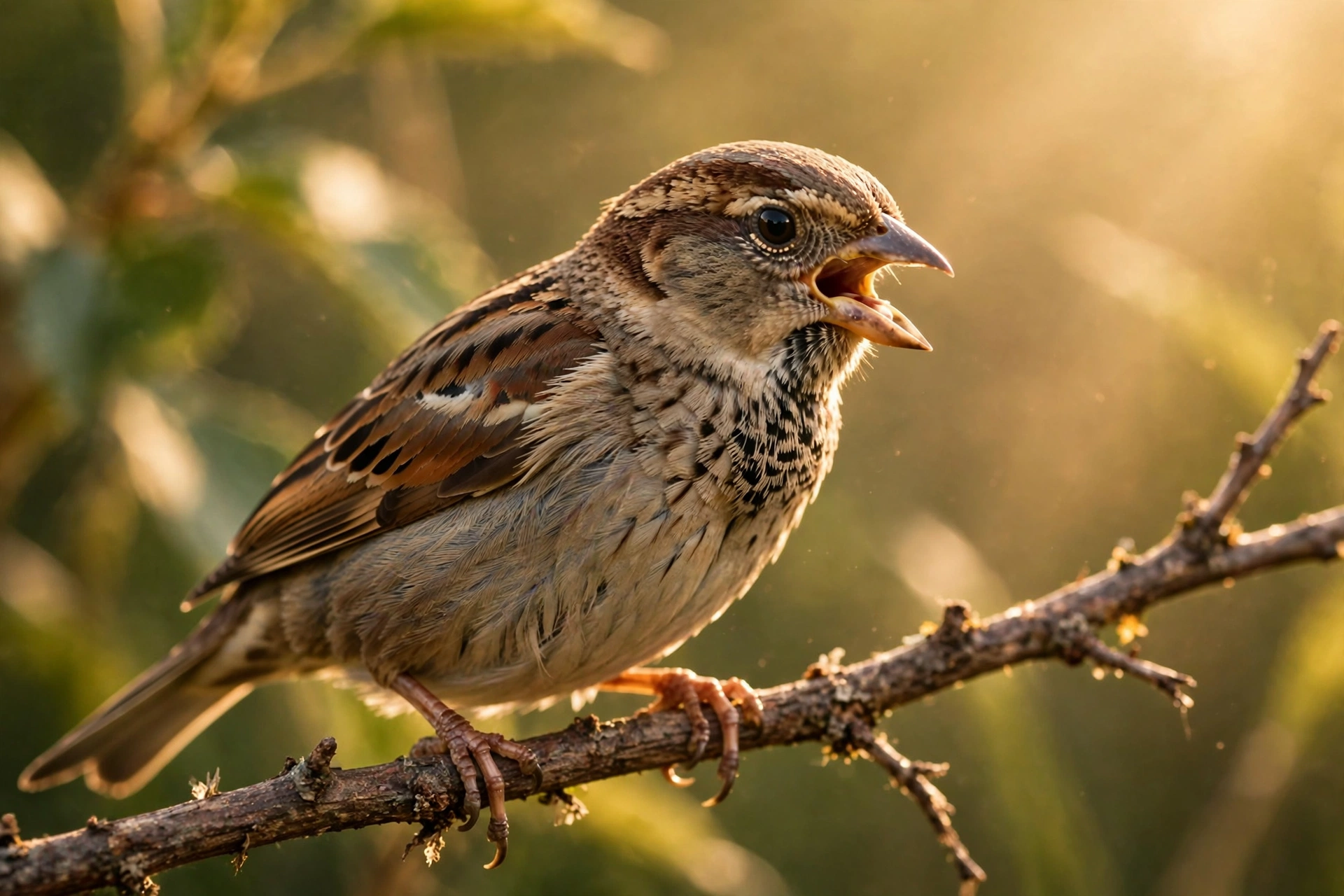
Watch a crow on a scorching August afternoon and you will notice something curious. Its beak hangs open, its throat quivers with each breath, but its feathers stay perfectly dry. No matter how hot the day gets, that bird will never break a sweat.
That is because birds cannot sweat. Not one of the roughly 11,000 bird species on Earth has sweat glands, which means the cooling trick humans rely on every summer simply does not exist in the avian world.
So how do birds survive heatwaves that would leave a mammal gasping? They pant, they flutter their throats, some even cool their legs with their own droppings, and they run a whole toolkit of behaviours refined over millions of years. This guide explains every method birds use to stay cool, which species use which tricks, and what you can do to help backyard birds when the temperature climbs.
The Short Answer: No, Birds Cannot Sweat
Sweat glands are a mammal-only invention. Humans carry millions of them, and even dogs and cats have a few on their paw pads. Birds have none at all: not under the wings, not on the feet, nowhere.
Without sweat glands, there is no cooling through the skin the way we use it. A bird’s skin sits beneath a near-waterproof layer of feathers coated in preen oil, which is brilliant for flight and insulation but useless for sweating. Cooling has to happen somewhere else entirely.
Birds do have one skin gland worth knowing about: the uropygial or preen gland at the base of the tail, which produces the oil they spread over their feathers while preening. It waterproofs and conditions the plumage, but it has nothing to do with sweating or cooling.
That somewhere else is mostly the respiratory system, plus clever use of bare skin, water, shade, and behaviour. As the BirdNote feature republished by Audubon puts it, you can watch a crow on a hot day as carefully as you like and you will never see it sweat, because birds do not have sweat glands.
Panting: How Most Birds Dump Heat
The most common cooling method in birds is also the most familiar: panting. A hot bird opens its beak and breathes fast and shallow, moving air rapidly across the moist surfaces of its mouth, throat, lungs, and air sacs. Each breath carries heat out of the body as water evaporates.
It works, but it is expensive. Panting is muscular work, and muscle work generates its own heat, so the bird is spending energy in order to shed energy. The net effect is still cooling, and most birds, from sparrows to eagles, rely on it as their first line of defence.
You can spot a panting bird easily in summer. The beak stays open, the body may bob slightly with each breath, and the bird usually goes quiet and still. A panting bird is not necessarily sick. On a hot afternoon it is usually just running its air conditioning.
Gular Flutter: The Throat Trick
Some birds have a fancier option than plain panting. It is called gular flutter, and it looks strange the first time you see it: the bird holds its beak open while the skin of its throat vibrates rapidly, like a tiny engine idling.
The fluttering drives air across the moist, blood-rich membranes of the upper throat at high speed, dumping heat through evaporation. Audubon describes it as the avian version of panting, and the comparison fits well: same goal, cleverer delivery.
Herons, egrets, cormorants, pelicans, vultures, and wild turkeys are among the regular practitioners. Nightjars take it to extremes. In one classic experiment, a Texas nighthawk sitting in 50C heat had its bill gently held shut so it could not flutter. When researchers released it, the bird resumed gular fluttering at once and its body temperature began falling within minutes.
Why bother with a special trick? Efficiency. In poorwills, scientists found that gular fluttering raised evaporative water loss enormously while barely raising the bird’s energy use. Heavy panting costs far more muscle power, and for a bird watching every drop of water, that efficiency matters.
If you see a great blue heron standing at the water’s edge with its beak open and its throat shimmering on a hot day, you are watching gular flutter in action.

Urohidrosis: Cooling Off the Unpleasant Way
Now for the method nobody expects. Storks, New World vultures, condors, gannets, and boobies cool themselves by excreting onto their own legs. The liquid waste, a mix of urine and faeces that birds pass together through the cloaca, evaporates off the bare, blood-rich skin of the legs and carries heat away with it.
Scientists call it urohidrosis, from the Greek words for urine and sweat, a name coined in 1963 because the effect works so much like sweating. As the fluid evaporates, it cools the blood vessels running just beneath the leg skin, and that cooled blood circulates back through the body.
It is remarkably effective. Thermal imaging of breeding white storks found that urohidrosis lowered leg surface temperature by up to 6C, according to research published in Ecosphere. The dried white crust left behind has a bonus function too: it reflects sunlight, giving the legs a little extra protection from radiant heat.
This is also why a turkey vulture’s legs can look chalky white in summer. It is not dirt; it is dried uric acid from repeated cooling sessions. Given how many hours vultures spend soaring in hot thermals, they need every cooling trick available, and this is one of the strangest in nature. Turkey vultures are true masters of hot-air soaring, which you can read more about in our guide to why vultures circle in kettles.
Bathing and Splashing: The Obvious Fix
When water is available, many birds simply get in it. Bathing cools a bird twice over: the water pulls heat directly from the body on contact, and then evaporation from the damp feathers keeps cooling after the bird climbs out.
Watch a birdbath on a July afternoon and you will see the full routine. Birds arrive, drink deeply, then duck, splash, and flutter, throwing water over their backs and under their wings. Afterwards they perch nearby and preen, rearranging damp feathers as they dry.
Drinking matters as much as bathing. Panting and gular fluttering burn through a bird’s water reserves quickly, and that water has to be replaced. The hotter the air, the more often a bird must drink, which is why reliable water sources become magnets for birds during heatwaves.
Shade, Posture, and the Art of Doing Nothing
Sometimes the smartest cooling strategy is behavioural: stop generating heat in the first place. As the day warms, many birds shift their schedule, foraging busily in the cool morning, going quiet through the midday furnace, then feeding again in the evening.
Shade is the other half of the trick. Temperatures beneath a dense bush or tree canopy can be far lower than in open sun, and birds know it. On hot afternoons, listen for the sudden silence in your garden. The birds have not left; they are just sitting it out in the coolest spots they can find.
Feather posture plays a role too. In cold weather birds fluff their feathers to trap insulating air. In heat they do the opposite, sleeking feathers tight against the body so trapped warm air can escape. Many birds also droop their wings slightly away from the body, exposing the thin, nearly featherless skin of the underwing to the air, like opening a window.
Parent birds extend these behaviours to their chicks. Nestlings cannot regulate their own temperature well, so adults shade them with their bodies, sometimes standing over the nest to cast a living parasol. If you are wondering how long that vulnerable stage lasts, our guide to how long baby birds stay in the nest breaks down timelines by species.
Legs, Feet, and Beaks: Built-In Radiators
A bird’s feathers are superb insulation, which becomes a problem when the goal is losing heat. The solution is to route warm blood to the few places feathers do not cover: the legs, feet, face, and beak.
Birds can widen the blood vessels in these bare areas, flooding them with warm blood from the core. Heat radiates off the skin into the air, the cooled blood returns to the body, and the cycle repeats. It is the same principle as a car radiator, run on blood instead of coolant.
This is why wading birds stand in cool water on hot days, and why you will see birds holding their beaks wide open even when they are not fluttering their throats. The toco toucan takes the beak radiator to its logical extreme: its enormous bill works as a controllable thermal radiator that dumps a remarkable share of body heat. For most birds the effect is subtler, but the plumbing is the same.
Flight itself helps too. Moving through the air at speed strips heat from the body, which is one reason soaring birds like hawks and vultures climb to cooler altitudes on thermals instead of flapping low over hot ground.

How Different Birds Beat the Heat
No single species uses every trick. Each bird leans on the methods that fit its body, habitat, and lifestyle. Here is how the cooling strategies compare across some familiar groups.
| Bird group | Panting | Gular flutter | Urohidrosis | Bathing | Behavioural tricks |
|---|---|---|---|---|---|
| Turkey vulture | Yes | Yes | Yes | Rarely | Soars to cooler air; shades nest |
| Herons and egrets | Yes | Yes | No | Yes | Stands in cool water; seeks shade |
| Wild turkey | Yes | Yes | No | Rarely | Rests in shade through midday |
| Owls | Yes | No | No | Rarely | Nocturnal habits; deep shade roosts |
| Hummingbirds | Yes | No | No | Yes | Feeds in cooler hours; seeks shade |
| Greater roadrunner | Yes | Yes | No | Rarely | Desert shade-seeker; rests midday |
| Ducks and waterfowl | Yes | Rarely | No | Yes | Spends the heat of the day on water |
| Songbirds (general) | Yes | No | No | Yes | Shade, stillness, sleeked feathers |
Hummingbirds deserve a special note. Their hovering flight burns energy at a furious rate, which generates a great deal of internal heat for such a tiny body. They cope by panting with open bills, bathing in wet foliage, and timing their busiest feeding to the cooler parts of the day. The nectar that fuels that metabolism comes with its own summer challenges, as explained in our hummingbird diet guide.
Why Evolution Never Gave Birds Sweat Glands
If sweating works so well for humans, why did birds never evolve it? The answer starts with feathers. Sweat soaking into plumage would mat the feathers, destroying both their insulation and their aerodynamics. A sweaty bird would struggle to fly and struggle to stay warm at night: a terrible trade.
Water economy is the second reason. Sweating spends water lavishly, and many birds live far from reliable water or cannot afford the weight of carrying extra. Evaporative cooling through the breath is far more frugal, and birds were already breathing anyway.
There is a third, subtler reason: birds run hot. A typical bird’s normal body temperature sits around 104 to 108F (40 to 42C), well above a human’s 98.6F. That bigger gap between body and air makes passive heat loss easier most of the time. The cooling crisis only arrives when air temperature climbs toward body temperature, which is exactly when the behavioural toolkit kicks in.
Evolution rarely reinvents what already works. Birds inherited a high-performance respiratory system built for the oxygen demands of flight, with air sacs that move huge volumes of air. Turning that same airflow into an evaporative cooler was the elegant, low-cost solution, and millions of hot summers suggest it works.
How You Can Help Birds During a Heatwave
When a heatwave settles in, backyard birds face a dangerous trade-off: every panting breath that cools them also drains water they may struggle to replace. A little help from you can genuinely save lives.
- Put out fresh water: a shallow birdbath, no more than an inch or two deep with a non-slippery base, gives birds somewhere to drink and bathe. Replenish it every two or three days and scrub it regularly, since stagnant water breeds mosquitoes and spreads disease.
- Add shade: native shrubs, small trees, and even a simple brush pile give birds cool refuges. Avoid heavy pruning during heatwaves, because that leafy cover is air conditioning.
- Keep feeders clean in heat: warm weather spoils nectar and seed fast. Hummingbird feeders in particular need fresh solution every couple of days in summer, or the sugar water ferments and becomes harmful.
- Watch for distress, but do not intervene directly: a bird panting with drooped wings in deep shade is usually coping fine. One that has collapsed in the open, seems unresponsive, or is gasping on the ground may be in real trouble. Contact a local wildlife rehabilitator rather than handling it yourself.
- Give nests space: chicks cannot cool themselves and depend on shading parents. If you find a nest during a heatwave, keep your distance and keep pets away.
Myths About Birds and Sweating
A few persistent myths deserve clearing up.
- Myth: birds sweat through their feet: they do not. Birds have no sweat glands anywhere on the body. Feet help with cooling because blood vessels sit close to the surface there, not because they perspire.
- Myth: a panting bird is sick: on a hot day, an open beak is usually just air conditioning. Panting becomes worrying only alongside other signs, such as fluffed-up posture in heat, discharge around the beak, or collapse.
- Myth: bathing birds are washing off sweat: bathing cools by direct contact and by evaporation of external water. It has nothing to do with sweat, which birds cannot produce.
- Myth: you should spray a hot wild bird with a hose: do not. Sudden cold water can shock a stressed bird, and handling adds stress of its own. Provide water and shade, then step back.
- Myth: feathers make overheating inevitable: feathers insulate, but birds actively manage them, sleeking down in heat, and they dump warmth through bare-skin radiators. The system works well; only extreme heatwaves overwhelm it.

Frequently Asked Questions
Do birds sweat at all?
No. No bird species has sweat glands, so none can sweat the way mammals do. Every cooling method birds use, from panting to gular flutter to bathing, works around this absence.
Why do birds not have sweat glands?
Sweat glands are a mammal-only trait, and they would be a poor fit for birds. Sweat would mat the feathers, ruining insulation and flight, and it would waste water that many birds cannot spare.
How do birds cool down in summer?
Mostly by panting: breathing fast with the beak open to evaporate water from the mouth, throat, and air sacs. They also seek shade, bathe, sleek their feathers, droop their wings to expose bare skin, and rest during the hottest hours.
What is gular flutter?
It is a rapid vibration of the throat membranes that many birds, including herons, pelicans, vultures, and turkeys, use instead of heavy panting. It moves air across moist throat surfaces to evaporate heat, and it costs far less energy than panting.
Why do vultures poop on their legs?
To cool down. The behaviour is called urohidrosis: liquid waste evaporates off the bare legs, cooling the blood underneath. Storks, condors, gannets, and boobies do it too, and studies show it can lower leg surface temperature by several degrees.
Do birds pant like dogs?
Very much like dogs: open beak, rapid shallow breaths. The difference is efficiency. Birds lose less water per unit of cooling than a panting dog, thanks to tricks like gular flutter and their highly efficient one-way airflow lungs.
Can birds die from heat?
Yes. When air temperature approaches a bird’s body temperature, around 104 to 108F, evaporative cooling stops working and heatstroke can follow quickly, especially without drinking water. Nestlings are the most vulnerable, which is why shade and water matter so much in heatwaves.
The Bottom Line
Birds never evolved sweat, and they never needed it. Between panting, gular fluttering, clever leg-cooling, well-timed baths, and the simple wisdom of sitting out the midday sun, they run one of nature’s most elegant cooling systems.
The next time you see a bird with its beak open on a blazing afternoon, you will know what you are looking at: not distress, but design. And if you keep the birdbath full, you are part of the system too.






[…] If your pet bird pants indoors, check the room first. Direct sun through a window, a cage near a heater, or a warm kitchen can push a small bird into heat stress quickly. Move the cage to a cooler spot, offer fresh water, and mist lightly if your bird enjoys it. Many birds cool down within minutes once the heat source is gone. For more on how birds manage summer heat, read our guide on how birds stay cool without sweating. […]