Skip to content

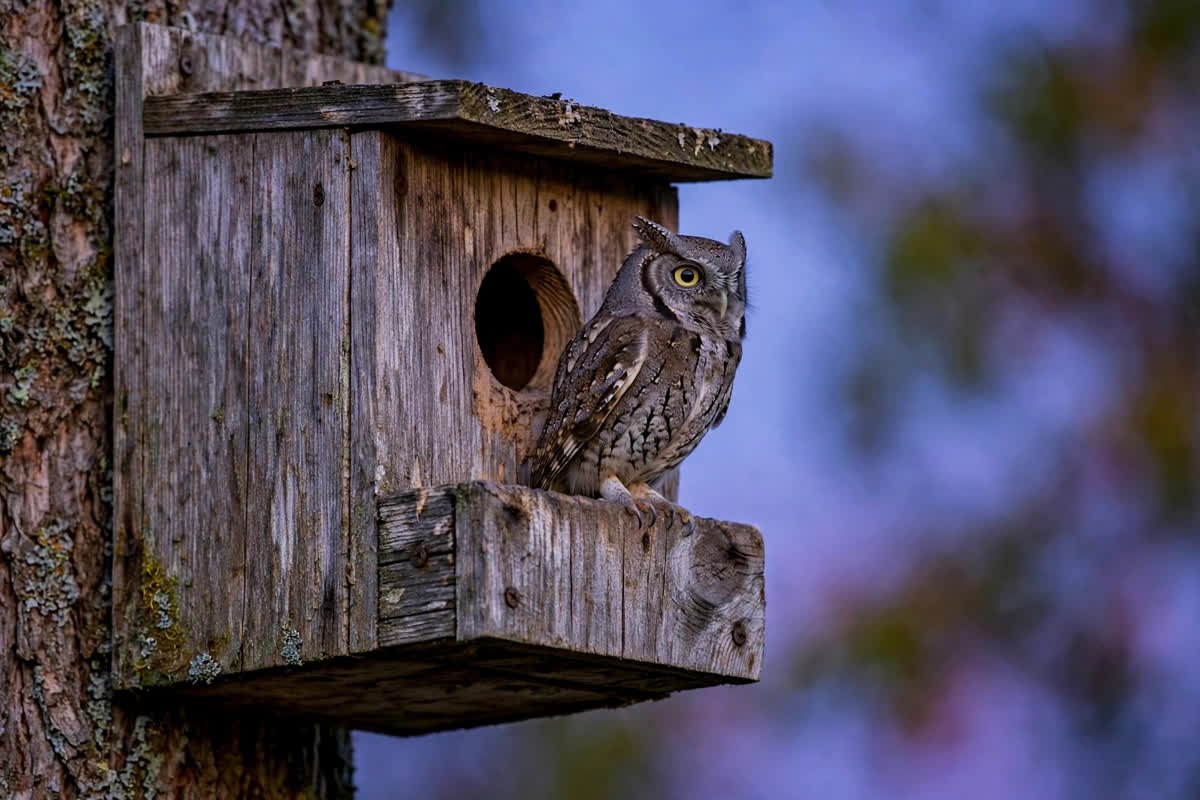
Hearing an owl call from your own backyard is one of the great thrills of birding. The good news is that learning how to attract owls to your yard is genuinely possible, not just a fantasy for people with acreage. Small owls such as screech-owls adapt well to suburbs, and the right combination of shelter, food, water, and darkness can turn an ordinary yard into an owl-friendly hunting ground.
You cannot force an owl to move in, and results take patience. Still, every strategy below is practical, backed by wildlife agencies and ornithology sources, and costs little. Whether you want natural rodent control or the thrill of hearing an owl call on a winter night, these steps work for any homeowner with a tree or two. Winter is the ideal season to begin, since owls start scouting nest sites as early as February.

Which Owls Might Visit Your Yard
Start with realistic expectations, because the owl you get depends on where you live and how much cover your yard offers. Suburban backyards in the eastern United States are prime territory for the eastern screech-owl, a small, adaptable owl that thrives near people and readily uses nest boxes. In the western states, the western screech-owl fills a similar role, although it takes to boxes less readily.
Barred owls and great horned owls cover far larger territories and visit yards that border woodlands or water. Barn owls favor open rural landscapes with barns, silos, or large fields. Check your region before buying lumber, so your effort matches the owl most likely to show up.
| Species | Region | Most realistic for yards |
|---|---|---|
| Eastern screech-owl | East of the Rockies | Yes: top pick for suburbs; uses nest boxes eagerly |
| Western screech-owl | Western states into Alaska | Yes: common, but slower to accept boxes |
| Barred owl | Eastern and Pacific Northwest woodlands | Maybe: needs larger box and nearby woods |
| Great horned owl | Almost everywhere in North America | Maybe: visits, but rarely nests in yards |
| Barn owl | Rural and agricultural areas | Unlikely in suburbs: needs open country and barns |
For a deeper look at these species, browse our owl species guide covering types, facts, habitat, diet, and behavior. Matching the strategy to the species saves you from building a barn-owl mansion when a screech-owl box is what your yard needs.
How to Attract Owls to Your Yard: 8 Proven Strategies
1. Install the Right Nest Box
A nest box is the single most effective step you can take for how to attract owls to your yard, especially for screech-owls. Natural tree cavities are in short supply in suburbs, and a well-built box fills that gap. Screech-owls also use boxes as year-round roosts, not only as nurseries.
Follow these dimensions and placement rules, drawn from the Cornell Lab’s NestWatch nest box plans and Audubon’s screech-owl nest box build guide:
- Entrance hole: exactly 3 inches in diameter, about 9 to 12 inches above the floor.
- Floor size: roughly 8 inches square, with an interior depth near 17 inches.
- Mounting height: 10 to 30 feet on a live tree or a sturdy pole.
- Nesting material: add 2 to 3 inches of plain wood shavings or dry leaves. Owls do not build nests, so they need this base layer.
- Drainage: drill small holes in the floor and cut saw grooves on the inside wall below the entrance so fledglings can climb out.
- Facing: NestWatch lists any direction as workable; east or south is the most common recommendation, and Audubon advises against facing the box north.
- Placement: choose a tree at least as wide as the box, at a woodland edge with a clear flight path to the hole.
- Squirrel control: on a pole, add a predator guard; on a tree, keep the box away from limbs squirrels can jump from.
Consider hanging a second box at least 100 feet away. Owls often keep an alternate site nearby, and Maryland’s Department of Natural Resources recommends pairing boxes to raise your odds.
2. Keep Old Trees and Snags
Mature trees with natural cavities are the original owl housing. If you have a dead or dying tree that does not threaten a house, fence, or path, consider leaving it standing as a snag. Woodpeckers excavate it first, and screech-owls move in after.
Resist the urge to over-prune. Owls choose roosts in dense canopies where they feel hidden during the day. A yard with a mix of mature trees and open hunting space below reads as prime territory to a passing screech-owl.
3. Add Perch Poles
Owls are perch-and-pounce hunters. They sit quietly, listen, then drop onto prey. A simple untreated wooden post, 10 to 15 feet tall, set at the edge of an open lawn or field gives owls a hunting station with a clear view of the ground.
Two or three poles spread around the property work better than one. Position them away from bright lights and busy paths. A nearby limb that overhangs but does not block the flight path also helps young owls climb out of the box, according to NestWatch.

4. Build Brush Piles
A brush pile looks messy to people and looks like home to the small mammals owls eat. Voles, mice, and shrews shelter in stacked branches, and a healthy prey population is what keeps an owl hunting your yard night after night.
Build the pile in a back corner with large logs at the base, smaller branches layered on top, and leafy twigs to finish. Leave gaps at ground level so small animals can move through. The pile also gives songbirds winter shelter, which complements your other work attracting birds to your backyard.
5. Plant Native and Leave the Leaf Litter
Owls eat more than rodents. Screech-owls dine heavily on moths, beetles, crickets, and other night insects, and those insects need native plants. Native trees, shrubs, and wildflowers support far more insect life than exotic ornamentals.
Leave some leaf litter unraked in garden beds. Leaf litter shelters the insects and worms that feed owls and their prey. This one change costs nothing and quietly raises the carrying capacity of your yard for the whole food web. Our guide to creating a bird-friendly garden walks through native plantings that support both songbirds and raptors.
6. Provide Water
Owls drink and bathe. A shallow birdbath or a ground-level dish with clean water gives them one more reason to linger. Ground-level water suits owls best, since they spend much of their time low in the yard.
Change the water every few days to prevent mosquitoes, and consider a small heater in freezing climates so water stays open through winter. Place the dish where vegetation gives approaching owls partial cover, not in the middle of an exposed lawn.
7. Go Dark at Night
Light pollution is one of the most overlooked barriers when learning how to attract owls to your yard. Bright floodlights wash out the darkness owls need to hunt, and they scatter the insects that screech-owls feed on.
Switch security lights to motion sensors so they stay off most of the night. Choose shielded fixtures that aim light down instead of up and out. Even turning off decorative landscape lighting after midnight makes a measurable difference. Dark skies let owls hunt by sound and low light the way they evolved to.
8. Never Use Rodenticides
This rule is non-negotiable. Anticoagulant rat and mouse poisons cause secondary poisoning in owls and other raptors. A poisoned rodent wanders for days before dying, becoming easy prey. When an owl eats it, the toxin accumulates in the owl’s body, causing internal bleeding, disorientation, and often death, as documented by the Lake County Audubon Society.
The irony is painful: the poison kills the very predators that control rodents for free. Manage rodents instead by sealing entry points, securing garbage and pet food, and using snap traps where needed. A yard with owls on patrol is itself one of the best rodent-control systems you can have.
What NOT to Do
A few common mistakes can undo all your good work. Avoid each of these:
- Overusing playback calls: playing recorded owl calls on a speaker can stress territorial owls and disrupt nesting. If you want to hear whether owls are around, listen on a quiet night instead.
- Disturbing roosts and nests: never shine lights into a nest box or roost tree, and give nesting owls wide space. NestWatch warns that disturbed females may abandon a nest early in the cycle.
- Trimming trees during nesting season: heavy pruning in spring can destroy a cavity nest. Schedule major tree work for late fall or winter.
- Letting cats roam at night: outdoor cats kill songbirds and can injure small owls; they also disturb the prey owls depend on. Keeping cats indoors protects both.
- Expecting instant results: an empty box in month one is normal. Owls prospect over seasons, not days.
Nighttime quiet matters for owls in more ways than one. If you are curious about where birds sleep at night, you will see why undisturbed roosting cover is so valuable to every species, owls included.
Signs an Owl Has Found Your Yard
You will probably notice the evidence before you see the owl itself. Pellets are the clearest sign: small, oval regurgitated bundles of fur and bone dropped beneath a regular perch. Whitewash, the chalky droppings owls leave on branches and fence posts, marks favorite roosting spots.
Listen on calm nights from February through April, when screech-owls call most actively. The eastern screech-owl gives a soft, descending whinny, while the western screech-owl sounds like a bouncing ball of short whistles. Scattered small feathers under a roost tree are another clue. Once you spot these signs, keep the yard dark and quiet, and resist the urge to investigate the roost up close.
When to Put Up an Owl Nest Box
Winter is the right time. Maryland’s Department of Natural Resources advises hanging boxes by mid-January, because screech-owls begin establishing territories in February and nest as early as March. An early box gets discovered during courtship, when males are actively showing females potential sites.
Do not despair if you missed the window. Screech-owls search for roost sites throughout the year, so any season works for getting a box on the tree. Clean out unoccupied boxes once a year, replace the wood shavings, and repair any leaks. A maintained box signals a reliable home for years.

Frequently Asked Questions
Will owls eat my pets or songbirds?
Screech-owls are too small to threaten cats or dogs, and they focus on insects, mice, voles, and the occasional small songbird. Great horned owls are a different story: they are powerful enough to take small pets left outside at night. Supervise tiny dogs after dark and keep cats indoors, and the risk drops to near zero for most households.
How long does it take for an owl to use a nest box?
Anything from a few weeks to more than a year. Owls may roost in a box long before they nest in it, and pairs often scout several cavities across a season. Hang the box by mid-winter, keep the yard owl-friendly, and check quietly. Patience is part of the process.
Do owl decoys attract real owls?
No. Plastic owl decoys are designed to scare birds away from gardens and buildings, not to invite owls in. A territorial wild owl is more likely to avoid the area or attack the decoy than to move in beside it. Save your money for lumber and build a real box instead.
What is the best direction for an owl box to face?
Cornell’s NestWatch says any direction can work, which is reassuring if your only good tree faces north. That said, east or south facing is the most common recommendation, and Audubon advises avoiding a north-facing entrance. Sheltering the box from driving wind and rain matters more than the exact compass bearing.
The Quiet Payoff of an Owl-Friendly Yard
Learning how to attract owls to your yard is really about building the habitat owls already want: a cavity to nest in, perches to hunt from, prey to eat, water to drink, darkness to work in, and no poison in the food chain. No single step guarantees an owl, but together they stack the odds strongly in your favor.
Start this winter with one well-built nest box and a commitment to go poison-free. Then listen on still nights in February and March. In return for modest effort, you gain one of nature’s most effective rodent-control partners and a wild soundtrack no backyard feeder can provide. That soft, descending whinny drifting through the dark is the sound of your habitat plan working.